Tuesday, 1 January 2013

Who was 2012's Golden Balls?

What a great 2012 it’s been. We’ve had the Diamond Jubilee and the Olympics, and for football lovers, Euro 2012, a dramatic Champions League, Real Madrid finally ousting Barcelona in la Liga, and probably the most exciting finish to a Premier League season ever.
 
Top banana
We have also been blessed with some prodigious individual performances over the last year, and these will be celebrated next week at the FIFA Ballon d’Or awards in Zurich. It’s pretty much impossible to be interested in football and not get drawn into the debate of who is the better player, Messi or Ronaldo. The Ballon d’Or gives us all an excuse to continue that debate, even if it does mean an opportunity for Sepp Blatter to make another messianic appearance and claim FIFA has significant relevance outside the World Cup.
FIFA is a clean organisation... honestly...
The Ballon d’Or was actually not a FIFA award until an aggressive takeover in 2010, when they bought the prize from the Amaury Publishing Group and merged it with its own World Player of the Year award. Apart from making the awards ceremony a horrible corporate event and an advert for FIFA, this change actually impacted the award itself. 

Unlike the old FIFA World Player of the Year award, which was voted by the coaches and captains of the international teams, the old Ballon d’Or, awarded between 1956 and 2009, was voted for exclusively by football journalists.
Journalists are naturally closer analysers of the game, and have more limited personal allegiances to the players involved. The FIFA award, therefore, always had an inherent bias towards the bigger name players and often had anomalies in the voting decisions.  

One example of this is the fact Paul Scholes, a player Zinedine Zidane described as ‘the complete footballer’, made the 50-man shortlist on five occasions (2000, 01, 03, 04 and 07), but never received a single vote. This wouldn’t seem that strange until you find out that Jan Koller, Papa Bouba Diop and Freddie Kanouté have. 

No idea who voted for me... oh maybe the Mali manager

In 1996, Matthias Sammer won the Ballon d’Or for his starting role in Germany’s triumph at Euro ’96 and a second successive Bundesliga title for Borussia Dortmund. The top 3 in the FIFA World Footballer of the Year, however, were Ronaldo, George Weah and Alan Shearer.

From humble sweeper to Ballon d'Or winner

Similarly, in 2003, Pavel Nedved won the Ballon d’Or for his instrumental role in Juventus winning Serie A and reaching the Champions League final. The top 3 in the FIFA award that year? Zidane, Thierry Henry and Ronaldo. 

Looking good

The electorate for the new FIFA Ballon d’Or is now a mix of journalists, national team coaches and national team captains. Has this altered the winner in the 2 years since FIFA bought the award?
Well, in 2010 Messi won the first new FIFA Ballon d’Or, ahead of Xavi and Iniesta. However, the journalists vote that year went to Wesley Sneijder, with Iniesta 2nd, Xavi 3rd, and Messi only in 4th place. 

Ha you guys win the World Cup but I'm still the best
 
Sneijder was truly outstanding in Inter’s treble winning campaign, and also scored 5 goals in driving Holland to the World Cup final in South Africa. For him to not even feature in the top 3 was bizarre to say the least, but points to the problem of the voting system.

What more do I have to do?

Messi, the Argentine captain, has a vote himself, and recently said, “I will vote for Xavi, Andres (Iniesta) and definitely one of my countrymen.” This is a clear admittance that votes from players and managers are clearly influenced by personal and political motives, and not purely an outside perspective on the best player for that year.   

What, I win all this just for being Argentinian?

Before I reveal my top 3 players of 2012 I should put down a few criteria for what I will base my selection on. Firstly, this is an individual not a team award, and therefore should go to the best player, not the player with the most medals in 2012. If that was the case Fernando Torres would have a case for winning the award given he won the Champions League, Euros and won the golden boot at the Euros. He also, however, spent most of 2012 unable to hit a barn door, so the Ballon d’Or will naturally be beyond his reach too.

Oh bugger, the goal's over there

Thus, an individual needs to be judged within the context of what they bring to their team, and how they have influenced its success. Their performance also needs to be judged in the context of the importance of the matches – big performances in big games, in high pressure situations, against tough opposition, should always carry more weight. Yes, consistency is also important, but it is those critical moments that are the difference between winning and losing, between great and very good.

For this reason, Lionel Messi does not feature in my top 3 players of 2012.

Don't worry Leo, I still love you

Messi is arguably the best player in the world currently, and potentially one of the greatest of all time. He has also had a superb 2012, scoring a record goals haul and breaking numerous individual records along the way. 

But, as brilliant and as consistent as he has been, he wasn’t able to raise his game when required and help Barcelona win a major trophy in 2012. And this is Barcelona team with a midfield of Xavi, Iniesta, Busquets and Fabregas controlling the ball and supplying the bullets for Messi to fire. A team described as potentially the greatest team of all time. 

I pass, he scores
  
In 2012 they lost their la Liga crown to Real Madrid by 9 points and crashed out of the Champions League to Chelsea in the semi-finals. While Messi scored numerous goals during the year, in Barcelona’s season defining games, the April Classico and those 2 semi-final matches against Chelsea, he failed to find the target, even missing a crucial penalty. 

Ouch

Yes he was the Champions League top scorer last season with 14 goals, but 5 of those goals came in a virtually dead last-16 2nd leg against Bayer Leverkusen and another 5 in group games against BATE Borisov and Viktoria Plzen. He was also the top scorer in la Liga with 50 goals, and had the 2nd most assists behind Mesut Ozil (16 to Ozil’s 17). 

High 5

But in the end, with all the talent in that Barcelona team, he wasn’t able to find raise his performance in those season-defining moments. 

The other reason Messi misses out on my list is because he didn’t have a major international tournament to participate in this year. If big game performances count more then every player in Euro 2012 had an edge – every game in a major international tournament is a big game.

His achievements in 2012, in the harsh light of day, end up being scoring a lot of goals against teams that are far weaker than his majestic Barcelona. Some of those performances were outstanding, but there were three even more outstanding players in the last 12 months.


3. Andrea Pirlo
For fans of midfield wizardry, there was no greater pleasure than watching Pirlo orchestrate the Italians towards the Euro 2012 final. In an era where athleticism and power are so prized, Pirlo showed that you didn’t need to have pace or be a great tackler to command the midfield zone. His range of passing was sublime and he effortlessly controlled the tempo of matches, while defending intelligently without needing to tear around the pitch.

Pirlo was central to almost everything good Italy did. He set up Di Natale’s goal in the opening game against Spain, he put Italy ahead in their next game against Croatia with a superb free-kick, and took the corner from which Cassano’s scored the opening goal in a tense final group game against Ireland. In the knock-out stages he totally ran the games against England and Germany, with a fine display of passing in both matches. Yes, he was overrun in the final but he was the tournament’s most consistent performer, and the reason Italy progressed much further than anyone had expected.

Try and get it lads


The Serie A season also came to be defined by Pirlo’s switch from Milan to Juventus. While Pirlo was obviously very highly rated at Milan, they preferred to move forward with industry, energy and youth. His consistency for Juventus was remarkable. With Claudio Marchisio and Arturo Vidal closing down opponents higher up the pitch, Pirlo had time and space in deeper positions, and dictated nearly every match he played in. Juventus not only won their 28th scudetto, but they also did so unbeaten, only the 3rd time that has even been achieved, and the first in a 38 game season. Not just did Pirlo control those games, he also topped the Serie A assists charts with 13. 


2. Andrés Iniesta
Iniesta had another superb season for Barcelona and Spain. He has always been a brilliant talent and a joy to watch, but he previously had a tendency drift in and out of games, and not be a central figure in his team’s successes. In the last few years, however, his consistency and influence have moved him from being a brilliant player to an important player, for both club and country.  

The fact Iniesta was voted the player of the Champions League and Euro 2012 shows just how much of a big game player he has become. In the Euros he was Spain’s key player from game 1, combining superbly with Jordi Alba on Spain’s left, and providing an incisiveness and drive that was often lacking in other parts of the pitch. 

Hmm, how many players can I take out of the game?

 Although Spain didn’t truly light up the tournament as most neutrals had hoped, he was their brightest diamond, and the most influential player in their attacking play. Although he didn't score in the tournament and only produced one assist, he was man-of-the-match in three of Spain's six matches, including the final against Italy. 

There was nothing to split my top two choices and it was only a penalty shoot-out that was the difference between Spain and Portugal reaching the Euro final. But for pure individual brilliance and for producing some outstanding displays in critical matches - there can only by one winner.


1.   Cristiano Ronaldo
Ronaldo is the complete footballer, the modern day machine. Big, strong, quick, he can dribble, he can shoot, has a powerful header, takes free-kicks. He drives through the pitch with the glide of a shark and the power of a bull, and then shimmies, faints and twinkles his restless toes like a flamenco dancer.  He is unmanufactured, a street footballer, producing explosive moments from nothing, with each moment in possession seemingly destined to result in a free-kick, a shot or a goal.  

Speed of a shark and looks like one too

Although Ronaldo has often been put in the shade by Messi’s achievements, it has been as much a case of Real Madrid being outshone by Barcelona. Ronaldo scored an outstanding 46 goals in la Liga last season to finally bring the title back to Madrid after 3 consecutive Barcelona triumphs. 

He has previously been described as a ‘flat-track bully’ for not contributing enough in bigger games, especially El Classico. However, in 2012, in matches against Barcelona, he scored in both legs of the Copa del Rey quarter finals, both legs of the Spanish Super Cup and both matches in la Liga, including the crucial title decider in April. That’s goals in 6 consecutive classicos, the first player ever to achieve that feat.

It's my time

What makes his achievements more astonishing is that his Real Madrid team is undoubtedly not the perfectly formed creative unit that Messi’s Barcelona is. As Jose Mourinho put it, "It is harder to be Cristiano than Messi. Messi grew up in the team where he plays, with the players with whom he plays. Not Cristiano. He was in England, then they put him here in a losing team. He had to grow over the last two years with this team which has been forming."

This is what I say to people who think Messi is best... He's no.2...

The whole Barcelona team is set up to maximize Messi’s genius and just about every player is creatively inclined, Jose Mourinho’s Real Madrid are built on the foundations of organisation and strength. This has doomed Ronaldo, unfairly in my opinion, to be seen as the inferior player, who plays a less attractive brand of football.

Remarkably Ronaldo has also achieved his incredible goal scoring record while playing from the left wing. While he scored an outstanding 60 goals for Real Madrid last season, their 2 central strikers, Karim Benzema and Gonzalo Higuain also contributed 32 and 26 goals respectively. The Barcelona team, however is built around Messi, so while he scored a remarkable 73 goals for Barcelona last season, their second highest scorers where Alexis Sanchez and Cesc Fabregas with only 15 goals apiece.   

As the special one said, "One (Messi) plays as a 9 and roams around in those 50 square metres where the distance to goal is smaller and defence less intense. The other (Ronaldo) plays as a winger. How does a winger score as many goals as a number 9?”

...and Ronaldo is no.1

While Real got knocked out at the semi-finals stage of the Champions League, Ronaldo was in superb goal scoring form, netting 3 times in the last 16, twice in the quarter-finals and twice again in the semi-finals. His only blemish was missing his spot-kick in the penalty shoot-out that saw them fall to Bayern Munich.  

And he faced déjà vu in Euro 2012, as his Portugal team fell at the semi-final stage after a penalty shoot-out, this time Ronaldo not even making it to the spot. Although he was largely disappointing in Portugal’s first two matches of that tournament, he produced an outstanding performance in their last crucial group match again Holland, and then scored a fantastic winning goal in the Quarter-final against the Czech Republic. While Portugal threatened Spain for large parts of their semi-final, they were unable to find the killer blow, and Ronaldo missed out on what could have been a career defining moment.

Oh crap I should've taken the first one

Nevertheless, it has been a remarkable year for Ronaldo. For individual brilliance, for contribution to team success, for incredible levels of consistency and for big performances in big matches, he truly deserves his year to be capped off by being acknowledged as the best performer of 2012. 

Unfortunately, because everyone loves Messi, it probably won’t happen. Should a personal affection for someone or a dislike of another influence the result? 

Ronaldo isn’t a dirty footballer. His disciplinary record is exemplary; he works unbelievable hard in training, and gives everything in matches. He shakes hands with his opponents after the game, win or lose, respects his managers, and you rarely see him arguing with a referee even when he’s being kicked from every angle. 

So yes he does pout a lot, use what seems an excessive amount of hair product, and likes to concentrate intensely before he’s taking a free kick. Are these reasons not to vote for someone as a footballer? 

Missile armed and ready to fire sir

If Ronaldo loses we know he’s going to look furious and sulky, we know he wants people to recognise his brilliance, we know he wants to win for the sake of winning, for the sake of ego and so he can shove the Ballon d’Or in Messi’s face (or other bodily part). But really isn’t that what we would all do, isn’t this just normal competitive human behaviour?


If Messi loses we’ll have to deal with magnanimous congratulations, transcendent niceness and child-like angelic congeniality. If he wins he will most likely say it was all because of his team-mates, his coaches, his school teachers, his sponsors, and the doctors who injected him with growth hormones as a kid.

Less hair product = more friends = more votes

In the highly corporatized, politically correct world we live in, Messi is the footballer an elite team of FIFA and Adidas engineers would programme into a system to design their perfect brand-conscious footballer. Equally, Barcelona with their fetish for possession and their good football that keeps telling you that it’s good football, is equally attractive to purist and casual fan alike. 

Barca will likely go down as the best team of this generation, Messi its best player, and in tendem maybe the best ever. Does this mean Messi was the best player of 2012? Not to me. But he wasn’t the best player in 2010 either so don’t be surprised if he wins this one too.

Friday, 16 November 2012

Arsene Wenger - Professor or Past it?

It’s the north London derby this weekend and, like last year, this match has the added significance of being potentially critical to the battle for Champions League places. Last year Arsenal’s 5-2 victory at the Emirates gave them significant momentum and there was only a single point between the clubs come May. 

The professor and the pupil

Arsenal have so far had a mixed start to the season but it often seems like the analysis of Arsenal’s situation is typically extreme and often heated. Initially fans and the media were raving about their new found defensive stability, under the tutelage of assistant manager Steve Bould. They were also drooling at the performances of Santi Cazola, and suggesting that Arsenal were a stronger team without Robin van Persie.

There really is a Santi Claus!

But in the last four weeks they have suffered losses to Norwich, Manchester United and Schalke, and then conceded 2 goal advantages to draw against Schalke in their return match and Fulham in the Premier League. The vultures are out again and many have questioned manager Arsene Wenger’s future at the club, just as they did this time last season.
Interspersed among these games was Arsenal’s AGM, where supporters let out their frustrations at not having won a trophy since their FA Cup triumph in 2005. For a big club like Arsenal this is obviously perceived as a failure, and subsequently a failure by Wenger. The question is, has Wenger actually failed?

To answer that question we need to understand how to judge a manager. The highly regarded sports economics professor Stefan Szymanski has done detailed studies on the impact of players and managers in football. In the book Soccernomics he showed that, because they do their job in public, the market in footballers in extremely efficient, and players largely earn what they’re worth. 
Professor Dalglish thought Andy Carroll was worth £35m... hmm

Furthermore in a study of English football managers, he found that league position was largely explained by a club’s wage bill - the correlation between player’s wages and league position is around 90%. It follows therefore that most other things, including the manager, are relatively unimportant.
Of course this doesn’t mean that the physio or the club mascot could do a manager’s job, just that their impact on overall league position is small relative to the impact of the resources at their disposal.  
Even Gunnersaurus has won a trophy!

This makes intuitive sense – put Jose Mourinho in charge of Accrington Stanley and they will improve, but they wouldn’t win the Champions League in 5 years.  
Accrington Stanley, who are they? Exactly

Of course player’s wages don’t explain everything; there is still room for a good manager to make a difference. Szymanski analysed English clubs from 1973 to 2010 and compared league performance against expectations based on their wage bill. The top 5 performers he identified were Bob Paisley, Bobby Robson, Alex Ferguson, Arsene Wenger and David Moyes.
Paisley, a giant of the game (or are those just miniature trophies?)

Paisley and Ferguson are all-time legends, having won 18 league titles and 5 European Cups between them. But while at ‘big’ clubs, they achieved their success without significantly outspending their rivals. Bobby Robson and David Moyes are more interesting cases since, in terms of silverware, they only have one FA Cup success between them - Robson’s 1978 success with Ipswich. But both managers are given huge credit for producing consistently excellent results with very limited budgets.

During his 13 years at Ipswich, Robson nearly always finished in the top 6, and was twice runners-up, despite only buying 14 players during that time, relying instead on players developed through the youth academy. Moyes similarly has only once finished in the top 4, but Everton have consistently outperformed more affluent rivals during his tenure.
Arise Sir Bobby

The problem for Wenger is expectations for success at Arsenal are far higher than at Everton now, or Ipswich in the 70s. The irony is this expectation is probably brought about from the success Wenger himself achieved in the early part of his Arsenal reign. Before their recent trophy drought Arsenal won 3 Premier League titles and 4 FA Cups, and did this with a modestly high budget and always in competition with a great overachieving manager, Alex Ferguson.
Ah the good old days

Many commentators have suggested a decline in Wenger’s powers over the years, suggesting that other teams have caught up with his once revolutionary ideas in training, diet and scouting. While this may be true, this isn’t the critical factor; the bigger reason is that the resources of the competition have increased significantly in recent years.  
In his first seven seasons Arsenal had the highest wage bill in the Premier League, averaging 7.5% of the total league spend, a slightly bigger amount than even Ferguson had over the same period.  However, in 2011 Arsenal were only the 5th biggest spenders in the Premier League, with a total wage bill of £124m. This placed them significantly behind big spending Manchester City (£174m) and Chelsea (£168m), but also Manchester United (£153m) and Liverpool (£129m). City are relative newcomers to the party, having increased their wage bill from £36m to £174m in just four years, but Chelsea, United and Liverpool have consistently been big spenders over the last 5 years.

Splashing the cash
On this basis it could be argued Wenger has actually overachieved, especially when considering the consistency of his performance - Arsenal have qualified for the Champions League in each of the last 15 seasons, a feat only matched by Manchester United and Real Madrid.
Of course supporters want trophies, and Arsenal haven’t won anything since their FA cup triumph in 2005. However, there are only 4 trophies available each season, and as per expectation, the majority have been won by teams with bigger spending power.
The 7 Premier League titles have been won by United (4), Chelsea (2) and Man City (1); the FA Cups by Chelsea (4), Man City (1), Liverpool (1) and Portsmouth (1). Yes Portsmouth are an exception here to the ‘big club’ status, but would Arsenal supporters rather have their club overspend and destroy their long term future like Portsmouth did?

Twiffic achievement, but was it worth destroying the club for?
The League Cup has been won by United (3), Chelsea (1), Liverpool (1), Spurs (1) and Birmingham (1) – so bigger clubs even have a hold in a competition they pay less attention to. The Champions League in this period has been won by Barcelona (3), United (1), Chelsea (1), AC Milan (1) and Inter (1). Milan and Inter are again examples of clubs that spent big money to gain success, but are now undergoing huge financial difficulties and restructuring as economic conditions have changed.
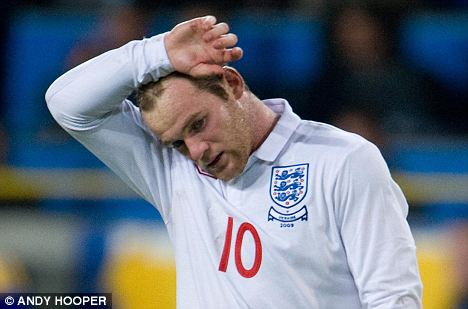
Berlusconi is told Zlatan has to be sold to PSG
While there have been plenty of jokes going around in recent years about the dustiness of Arsenal’s trophy cabinet, the same could be said of most clubs. And clubs who temporarily spent big to achieve success, such as Portsmouth, Inter, AC Milan and Liverpool, are currently struggling, as they face up to the costs of chasing that success.
Oh yeah, you know the joke

Interestingly Szymanski’s analysis of managers did not take any account of a manager’s transfer spending. What makes Wenger’s relative performance even more remarkable is that, since their move to the Emirates in 2006, Arsenal have had net transfer INFLOWS of £49m. In the same period Manchester City and Chelsea have been the biggest spenders, splashing out £444m and £235m respectively. But even Liverpool (£105m), Manchester United (£93m), Tottenham (£61m) and Aston Villa (90mm) have spent significant positive amounts over this period. And even relatively frugal clubs, such as Newcastle (-£28m) and Everton (0) haven’t been as restricted in their transfer dealings as Arsenal have.
Hmm should I buy another ship or Torres for £50m? Ah I'll have both

Many of the transfers involved were simply due to the club receiving offers that were too good to refuse, from clubs with larger financial power. For example, Alex Hleb (11.8mm) and Thierry Henry (16.1mm) moved to Barcelona, and Emmanuelle Adebayor (25mm) and Kolo Toure (16mm) to Manchester City. This summer’s sale of Alex Song could be considered in this bracket – £15mm is a considerable sum for a player with undoubted talent but questionable tactical discipline.
Gone for a song?

Robin van Persie (22m) and Samir Nasri (22m) had reached the final year of their deals, so Wenger’s hands were tied in these cases, and once again they moved to teams with greater spending power. Cesc Fabregas (35m) was so desperate to rejoin his boyhood Barcelona that it wasn’t in Arsenal’s interests keeping an unhappy player. In all cases Wenger made significant profits on these players, so credit must go to him for developing their talents to the point where clubs with greater financial clout would be willing to pay significant sums for their transfer.
I love Arsenal, no really I do... just not as much as Barca

While these transfers make sense individually, collectively it appears that Arsenal are a selling club, and focused on generating profits. In reality, the club hasn’t paid out any dividends to the shareholders, and all the profits that have made on player sales have been retained within the club.
Ignoring player sales, Arsenal are actually running a fairly balanced budget. In their 2012 accounts, for example, the club reported a turnover of £235m, with £200m of expenses (£143.5m in player wages). They also have £14m interest charges to service each year for their mortgage on the Emirates stadium. After infrastructure projects, such as enhancements to corporate hospitality, a new medical centre, and planned improvements to the youth academy, there is little left for spending in the transfer market.
I have this much to spend each year, what do you expect?
Of course a big gripe with supporters is that they pay some of the highest ticket prices in Europe, and indeed their matchday revenues are significant. In 2011 they generated £93m from matchdays which is only behind, Real Madrid (£111m), Manchester United (108m) and Barcelona (£100m). It is also a long way clear of rivals Chelsea (£67.5m), Liverpool (£41m) and Manchester City (£26.5m).
Unfortunately, these numbers are nothing in comparison to the external money put into Manchester City and Chelsea by their owners. It is estimated that Roman Abramovich has ‘invested’ over £1bn in Chelsea since 2003, while Sheikh Mansour has made similarly large contributions to Manchester City’s balance sheet. In the 2010-11 season Chelsea reported losses of £68m, while City’s loss of £197m was the greatest annual loss in football history. Unfortunately for Wenger these clubs have changed the playing field, driving wages up and making it difficult for a club running a balanced budget to retain it’s best talent.
£197m loss? Pah, plenty more where that came from

So, given their constraints, Arsenal are performing at, or above, expectations, and their cash position is strong due to a positive flows in the transfer market. Is there anywhere the club can improve?
The first area is the club’s wage structure. While Arsenal’s overall wage bill is large enough to attract good players, they have a flatter wage structure than most, meaning that fringe players like Squillaci and Chamakh are well rewarded. A prime example of this was Johan Djourou’s new £50k/week contract signed in February, a player who is yet to make an appearance so far this season. This policy has resulted in a difficulty in offloading unwanted players, hence why Bendtner, Denilson and Park had to be loaned out rather than sold.

Woo guys, we're all on 50k a week!!
The board has also not done a good enough job with contract renewals. Wenger’s hands were tied over the sales of Nasri and Van Persie due to their contracts being run down, and the same situation is currently occurring with Theo Walcott. Rather than renewing deals with fringe players on good terms, the moneymen should have focused on rewarding their star names with more lucrative long-term contracts. Any club needs to focus on retaining their best talent wherever possible, to help the manager build a consistent playing squad.

Potentially flying the nest
The other area the board need to work harder on is growing their commercial revenues. In 2011/12 the club only generated £53m in commercial income, which pales into insignificance compared to the big 3 in this area of Bayern Munich (£161m), Real Madrid (£156m) and Barcelona (£141m). It is also less than half the £118m generated by Manchester United and less than Liverpool (£77m), Manchester City (£65m) and Chelsea (£57m).
This weakness is primarily due to the fact they tied themselves into long-term deals to finance the Emirates stadium project. The 8-year shirt sponsorship deal they signed with Emirates only pays £5.5m/year, while Liverpool, United and City reportedly earn £20m from Standard Chartered, Aon and Etihad respectively. Their deal with kit supplier Nike only earns them £8m/year, while Liverpool and Manchester United receive around £25m/year from their deals with Warrior and Nike respectively. These deals are however due to expire at the end of next season so if renewed at market rates Arsenal can expect an upturn of around £30m/year in commercial revenues.
I give you this plastic plane, you give me cheap 8-year sponsorship

Alongside this, the club undertook its first pre-season tour to Asia this year. A primary reason their rivals have been so much stronger in commercial tie-ups is the use of pre-season tours to grow their global brand. While Wenger has resisted this previously, given it isn’t ideal preparation, the reality is this is going to become a necessity if the club wants to compete financially going forward.

Clowning around in Asia helps pay the bills
The simple fact of the matter is what while Arsenal fans have been frustrated in recent years from a lack of silverware, the club has simply been a victim of changes to the financial landscape of English football. Put simply, Arsenal have not won a trophy since billionaires entered the Premier League, while also being victim to the investment and financial planning required to build the Emirates stadium.  
The club might have the highest ticket prices in Europe, but they also have a beautiful new ground in one of the wealthiest cities in the world, a ground they should be proud of and one that puts them in a strong financial footing for years to come. They also have a manager who demands an attractive style of football, who consistently develops players that the biggest clubs in the world are willing to pay huge fees for.
High prices but they keep on coming...
At a time when not just football clubs but national economies are facing future austerity due to a lack of smart financial planning, it is surely unfair to criticise Arsenal for being conservative in their spending. There is no doubt the purse strings could be loosened slightly, but they would still have struggled to cope with the financially doped Chelsea and City.

 Even still, with all this against him, with some better luck with injuries, Arsenal would likely have won some trophies in recent years and therefore had a better chance of retaining some of their star players. Think how Alex Ferguson struggled without Cantona in 95, Keane in 98, Ferdinand in 04 and Vidic in 2012.

While Arsene Wenger is no Alex Ferguson in terms of achievement, his performance considering the resources available to him have been consistently excellent, and should be acknowledged as such. He has consistently delivered attractive, attacking football that has been good enough to qualify them for the Champions League year in, year out. Possibly magnifique, but certainly trés trés bon. 

Wednesday, 24 October 2012

The FIFA Rankings: Good, Bad or Ugly?

"Somebody must have gone down the pub at lunchtime and scribbled the rankings on the back of a beer mat because they are ridiculous," wrote Robbie Savage in his Daily Mirror column last month. While Savage isn't known to hold back, this pretty much sums up the view of most British journalists on the FIFA rankings for international teams.

Savage gives FIFA rankings the hairdryer treatment 

We've seen recent headlines on the subject such as, "Rank Failure" (The Sun), "You're having a laugh" (Daily Mirror) and "This is getting silly now" (Daily Mail).

This view is primarily based on England being in a lofty 5th position (and as high as 3rd in August). Matthew Norman wrote an article in the Telegraph suggesting that the ranking was "Fifa's cunning plan to blind us to our inadequacy."  

Hmm what a brilliant idea

So is there something fundamentally flawed with the ranking calculations or is this just another case of over zealous journalism? 

In the previously mentioned Telegraph article, Norman goes on to state that the calculation, "appears to be a mathematical formula melding the more opaque calculations of the Duckworth-Lewis method with the most abstruse aspects of quantum gravity theory."


Something like this maybe?


Having decided to take the plunge and have a closer look at the calculations, it was surprising to find that they are actually very simple and easy to follow. Points are awarded to teams for each match played based on only 3 factors:

1) The result
2) The competition it was played in
3) How strong the opposition was

Pay attention! Here comes the science bit...

The formula is simply:

Points Scored = M x I x T x C

M is the match result. 3 for a win, 1 for a draw and 0 for a loss. If a match is won on penalties then the winning team gets 2 and the losing team 1.

I is the match importance. This can only have one of 4 values - 1 for a friendly; 2.5 for a World Cup or confederation tournament (e.g. Euros, Copa America, African Nations etc.) qualifier; 3 for a confederation tournament match or 4 for a World Cup tournament match.

T accounts for the strength of the opposition based on their prevailing ranking. The top ranked team (currently Spain) are given a value of 200, the second 199 and so on; while teams ranked 150 and below are assigned a minimum value of 50.

C is minor adjustment for the strength of the opposition's confederation. The values are based on performances in the last 3 World Cups, and currently European and South American teams are given a value of 1, the Central and North Americans 0.88, Asian and African teams 0.86 and Oceanic teams 0.85.

So simply put there are only 3 factors that influence the rankings points earned - the result, the importance of the match, and the strength of the opposition.

Woo hoo Wazza... even we can understand that!

The only slight complicating factor is that while matches are over a full World Cup cycle are taken into account (i.e. the last 4 years results), more recent results are given greater importance. So matches in the last 12 months are given 100% value, the next 12 months 50%, the 12 months after that 30% and the remaining results only 20% of their original value. Once a match is over 4 years old it drops off and no longer factors in the ranking calculation.

Ok so the calculations are fairly straight forward and logical in principle, and could be done by anyone with a GCSE in Maths. So why the disconnect between England's lofty position, and many journalist's opinion of where they should be?

You want me to explain our ranking? Hmm...

The probable answer to that question is that the rankings are representative of performance over a sustained period in all matches and not designed to be a replication of tournament success. Tournament games rightly carry a heavier weighting in the calculations, hence Spain's position as clear no.1 is no surprise. But friendlies and qualification matches also play their part. Given the huge emphasis the press and public put on tournament progression, this is probably where the disconnect lies.

Is it possible to discuss England without mentioning you know what? 
Don't be silly...

To evaluate the claim that the rankings are a poor representation of reality, it is worth looking at the performances of the teams around England, which many journalists clearly believe to be far superior outfits. 

3rd placed Portugal performed averagely in the last two tournaments, reaching the Last 16 in 2010 and the Semis at Euro 2012. They also only scrapped through qualifying for both tournaments, coming 2nd in their group to Denmark both times, and only reaching the tournaments via the playoffs.

Please not Spain again...

4th placed Argentina struggled to qualify for WC2010, coming 4th placed in South America behind Chile and Paraguay, having won only 8 of their 18 qualification matches. They also were knocked out at the last 8 stage of the Copa America last year (a tournament with only 12 teams), having only won 1 of their 4 matches, and that against a weak Costa Rica side.

An amazing forward line... but Messi results

6th placed Netherlands have been generally superb in the last 4 years but they crashed out of Euro2012 after 3 straight defeats in the group stages. As much as England's performance in the tournament disappointed their supporters, imagine how the Dutch felt.

Oh dear...

7th place Uruguay had a fantastic 2010 World Cup and won the 2011 Copa America, but their 2012 results (which carry the highest weighting) have been poor. In their 9 games this year they have only managed a single win against Peru, with 5 draws and 3 losses in the remaining 8 matches.

8th placed Italy have certainly seen an upturn in results since the arrival of Cesare Prandelli culminating in reaching the final of Euro 2012. But only 2 years ago in South Africa they came bottom of a group containing Paraguay, Slovakia and New Zealand, failing to win a single match. 

Rolled over by the minnows

In places 9-12 are Colombia, Greece, Croatia and Russia. Teams who haven't exactly had much notable success, and who surely no one would think should be above England on current form.

13th and 14th are the more interesting cases of France and Brazil. France have performed poorly in the last 2 tournaments with 1 draw and 2 losses at WC 2010 and 1 win, 1 draw, 2 losses at Euro 2012. Brazil only reached the World Cup quarter finals and only won one match at the 2011 Copa America. Being hosts for 2014 they are also suffering from a lack of qualifying  matches, which is naturally hurting their ranking.  

The only way is up

Beyond that, Switzerland, Ivory Coast, Chile, Denmark, Mexico and Ecuador complete the top 20. Again, can it be genuinely said that any of these teams have performed more strongly than England in the last 4 years?

There is no doubt England are in a transitional phase with a new manager and the long running John Terry saga causing unwanted distractions. While there has been justified criticism of England's recent performances, they are nevertheless unbeaten in the 11 games Roy Hodgson has been in charge. In fact since getting knocked out of the 2010 World Cup to Germany England have only lost 2 games, and both were friendlies, against France and Holland. 

How are we still unbeaten? No idea...

Once again it needs to be made clear that the purpose of the rankings is to be a representation of success over a sustained period in all matches and not just to replicate tournament performances. The frustration for England fans is that, after recent disappointments, they don't feel they are the realistic contenders to win a tournament that a no.5 ranking would suggest. 

Unfortunately for the England situations have conspired against them in the last 2 tournaments. In 2010 they lost captain Rio Ferdinand to injury in the build-up, while star player Wayne Rooney was suffering from an ankle injury, and was a long way short of his best form. 

Only 15 mins played? I'm knackered!

Their Euro 2012 preparation was disrupted by the John Terry saga and Fabio Capello's subsequent resignation. Roy Hodgson barely had time to prepare for the tournament and subsequently was hit by injuries to Frank Lampard, Gareth Barry, Chris Smalling, Kyle Walker and Gary Cahill. With Tom Cleverly also unavailable and no SOS being put out to Michael Carrick or Paul Scholes, Hodgson was left having to use Jordon Henderson as back-up for Parker and Gerrard in central midfield. 

Oh dear, we both know it's game over now...

Tournaments also offer a very specific set of circumstances that England seem incapable of dealing with. They always come at the end of the season, when Premiership players are often tired, given the pace, competitiveness and - given the lack of a winter break - relentlessness of the competition. They also seem to suffer from the media scrutiny and weight of expectation from supporters. Lastly, tournaments, unlike qualification matches, are mostly played in hotter summer conditions, where more calculated possession based football is likely to generate greater success than the higher tempo game seen in the Premier League. 

Yes the calculations could be tweaked to give more weighting to tournament matches, and give bonuses for progressing further. But that would further complicate them and only further dilute the value of friendlies and qualifying games. 

The problem is not really with the rankings, or their complexity, but more the disconnect between their actual purpose and what the media and supporters think they should represent.